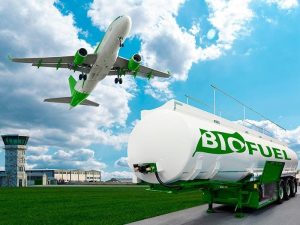
Sustainable Aviation Fuel (SAF) is critical to decarbonizing global air travel, but scaling production is complex. With multiple feedstock types, diverse refining pathways, and strict quality standards, the SAF value chain demands precision and flexibility.
Enter AI – bringing intelligent optimization to every link in the SAF lifecycle, from feedstock selection to real-time refining, compliance, and carbon credit generation.
🎯 How AI Can Make This Product or Solution Much Better
🧪 Feedstock Prioritization and Conversion Pathway Optimization
AI models evaluate feedstock types, emissions profiles, and costs to choose the optimal production route – whether it’s HEFA, ATJ, Fischer-Tropsch, or biomass-to-liquid (BtL).
Supports region-specific decisions based on policy frameworks, infrastructure, and refinery compatibility.


 Our specialty focus areas include

Net Zero by Narsi
Insights and interactions on climate action by Narasimhan Santhanam, Director - EAI
View full playlist🔧 Real-Time Refining Process Control
AI dynamically controls hydroprocessing parameters (e.g., temp, pressure, H₂ dosing) to maximize jet-range fuel yield and meet ASTM D7566 standards.
Predicts catalyst fouling and detects anomalies early—minimizing downtime and energy use.
🚛 Supply Chain and Blending Optimization
AI manages feedstock supply logistics, fuel blending, and demand forecasting across airports, reducing costs while maintaining fuel quality consistency.
Optimizes blending to ensure jet fuel spec compliance and reduces carbon intensity (CI) across the distribution chain.
📉 Lifecycle GHG and Carbon Intensity Certification
AI automates carbon intensity scoring and lifecycle modeling, streamlining compliance with CORSIA, LCFS, RED II, and other frameworks.
Enables real-time emissions tracking and simplifies SAF credit generation and verification.
🛠️ How AI Can Overcome Challenges
| Challenge | AI Solution |
|---|---|
| Feedstock variability and seasonality | AI balances multi-source intake and optimizes processing routes |
| Cost-competitiveness vs. fossil jet fuel | Predictive control reduces downtime and improves fuel yield |
| Quality control and spec compliance | Real-time AI quality checks ensure ASTM blending and SAF certification |
| Complex GHG and CI tracking | End-to-end emissions modeling automates MRV and credit validation |
🤖 Main AI Tools and Concepts Used
- Digital twins of SAF production systems for process forecasting
- ML algorithms for refining control and product fraction prediction
- Neural networks for emissions scoring and fuel property forecasting
- Optimization models for feedstock logistics and blending efficiency
- Computer vision for jet fuel quality inspection and certification analytics
📊 Case Studies
- World Energy (USA):
Operates a commercial SAF plant in California using AI for HEFA optimization and refinery forecasting. - British Airways (UK):
Uses AI-powered digital twins in the Altalto waste-to-jet project to optimize FT synthesis and emissions tracking. - Neste (Finland):
The world’s largest SAF producer. Deploys AI for blending, feedstock prediction, and process automation.
🚀 Relevant Startups & Providers
| Company | TRL | Focus |
|---|---|---|
| LanzaJet | TRL 8 | Alcohol-to-jet SAF with AI-enhanced energy and conversion modeling |
| World Energy | TRL 9 | HEFA-based SAF production with AI for predictive refinery performance |
💡 Want More?
Follow us for deep dives on how AI is shaping the clean fuels of the future – from SAF and RNG to algae, ethanol, and advanced bio-oils.