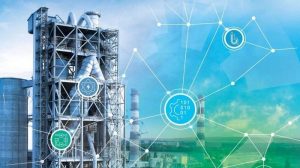
Cement manufacturing is one of the most energy-intensive industries – yet a massive amount of heat escapes unused from kilns, coolers, and stacks. Waste Heat Recovery (WHR) systems can capture this energy, but real-world efficiency is often held back by process variability and harsh conditions.
Enter AI: transforming WHR from a fixed system into an intelligent, adaptive engine for energy recovery, carbon reduction, and cost savings.
🎯 How AI Can Make This Product or Solution Much Better
🔥 Real-Time Monitoring & Heat Mapping
AI-powered thermal imaging and sensor fusion systems generate real-time maps of heat distribution across kilns, preheaters, clinker coolers, and exhaust systems.
This enables precise identification of recoverable heat zones and optimizes placement of WHR units like waste heat boilers or Organic Rankine Cycle (ORC) systems.
🧠 Dynamic Control of Recovery Systems
AI regulates heat exchange parameters – flow rate, pressure, temperature – based on real-time production load and ambient conditions.
Reinforcement learning adjusts steam generation and power cycles to maximize recovery without disrupting clinker quality or plant operations.


 Our specialty focus areas include

Net Zero by Narsi
Insights and interactions on climate action by Narasimhan Santhanam, Director - EAI
View full playlist🔍 Predictive Maintenance & System Health Diagnostics
Machine learning tracks turbine, boiler, and exchanger data to detect fouling, corrosion, or scaling.
It predicts potential failures and schedules preemptive maintenance – reducing downtime and extending asset life.
⚙️ Energy Yield Optimization & Load Integration
AI maps recovered energy to in-plant electricity or thermal loads (e.g., raw material drying), or exports to the grid via smart microgrid logic.
It continuously optimizes energy use across varying demand profiles.
🌍 CO₂ Reduction & Compliance Forecasting
AI calculates emissions saved from WHR operations and aligns them with carbon compliance schemes like EU ETS or India’s PAT.
Enables data-backed energy and credit planning across facilities.
🛠️ How AI Overcomes Key Challenges
| Challenge | AI Solution |
|---|---|
| Variable heat profiles and process shifts | Real-time control adapts to dynamic kiln and process conditions |
| Harsh conditions degrading equipment | Predictive maintenance extends component life and improves reliability |
| Retrofit complexity in legacy plants | Digital twins simulate WHR integration before physical implementation |
| Recovered energy goes unused | AI syncs energy output with plant loads or storage for full utilization |
🤖 Main AI Tools and Concepts Used
- Machine learning for thermal load prediction
- Digital twins for kiln and WHR system simulation
- Reinforcement learning for steam cycle optimization
- Anomaly detection for exchanger/boiler diagnostics
- AI-integrated emissions tracking and lifecycle analysis
📊 Case Studies
- LafargeHolcim (Global):
Real-time turbine performance optimized using AI, improving WHR efficiency and process reliability. - Taiheiyo Cement (Japan):
Deployed AI-controlled ORC systems for volatile temperature zones, boosting WHR efficiency by 20%. - HeidelbergCement (Germany):
Reduced unplanned WHR turbine downtime by 40% through predictive AI diagnostics.
🚀 Relevant Startups & Providers (TRL 7–9)
| Company | TRL | Highlights |
|---|---|---|
| CEMEX Ventures | 8–9 | Backs AI-driven industrial tech for WHR, emissions, and sustainability |
| Enertime (France) | 8–9 | ORC provider integrating AI for energy flow and turbine optimization |
| Carbon Re (UK) | 7–8 | Specializes in AI for kiln efficiency, now expanding into WHR intelligence |
💡 Want More?
Follow us for more insights on how AI is revolutionizing energy efficiency, decarbonization, and industrial innovation across cement, steel, and beyond.