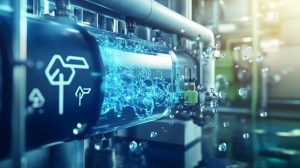
Electrolyzers are key to producing green hydrogen from renewable electricity. But fluctuating solar and wind supply, system degradation, and operational inefficiencies make large-scale hydrogen production complex and costly. That’s where AI comes in – bringing intelligence, stability, and optimization to next-gen hydrogen systems.
🎯 How AI Can Make This Product or Solution Much Better
⚙️ Dynamic Operation Optimization
AI tunes electrolyzer parameters (voltage, current density, flow rate) in real time to match intermittent solar and wind inputs.
This enables smooth ramping and partial load operation, maximizing hydrogen output while preserving efficiency.
🧠 Predictive Maintenance & Health Monitoring
AI detects early signs of wear in membranes, electrodes and stacks by monitoring pressure, temperature and current profiles.
It predicts failures before they happen, reducing downtime and costly unplanned repairs.
🧪 Stack Life Extension
AI models how electrolyzer stacks degrade over time under dynamic load conditions.
By optimizing usage profiles, it extends stack life and cuts replacement costs – key for commercial viability.


 Our specialty focus areas include

Net Zero by Narsi
Insights and interactions on climate action by Narasimhan Santhanam, Director - EAI
View full playlist💧 Process Optimization for Water and Energy Use
AI orchestrates pumps, cooling systems, and compressors to ensure minimal water use and power losses.
Improves overall system efficiency from water intake to hydrogen compression.
⚡ Grid and Market Integration
AI aligns hydrogen production with electricity prices, demand response events, and carbon intensity forecasts.
It produces hydrogen when it’s cleanest and cheapest, integrating seamlessly with virtual power plants and DERs.
🛠️ How AI Overcomes Key Challenges
| Challenge | AI Solution |
|---|---|
| Variable renewable power supply | AI forecasts and adjusts load dynamically to ensure stable hydrogen production |
| Stack degradation from cycling | AI optimizes duty cycles to reduce mechanical and chemical stress |
| High operating costs and energy use | AI minimizes parasitic losses and tunes auxiliary system efficiency |
| Complex decision-making across systems | AI provides plant-wide coordination using digital twins and real-time analytics |
🤖 Main AI Tools and Concepts Used
- Time-series forecasting for renewable input and grid conditions
- Reinforcement learning for dispatch and load control
- Anomaly detection using multi-sensor fusion
- Predictive analytics for membrane and stack health
- Digital twins for plant-level simulation and optimization
📊 Case Studies
- ITM Power + Shell (UK): AI-powered predictive maintenance extended stack life at industrial scale.
🚀 Relevant Startups & Providers
| Company | Focus |
|---|---|
| Enapter (Germany) | Modular AEM electrolyzers with AI-driven diagnostics and control |
| Sunfire (Germany) | High-temp electrolysis using AI for process tuning and fault detection |
💡 Want More?
Follow us for more insights on how AI is revolutionizing hydrogen, renewables, and next-gen energy systems. The energy transition needs intelligence – don’t miss what’s next.