Offshore wind is a cornerstone of the global clean energy transition – offering massive generation potential and high capacity factors. But operating in harsh, remote marine environments presents a unique set of O&M challenges that drive up costs and risks.
That’s where Artificial Intelligence (AI) comes in: enabling predictive diagnostics, autonomous inspections, and smarter crew logistics to slash downtime, reduce costs, and boost output.
In this post, we explore how AI is transforming offshore wind O&M from a high-risk, labor-intensive process into a data-driven, intelligent ecosystem.
📚 Table of Contents
- Smarter Offshore Wind O&M with AI
– 1.1 AI-Enabled Drone and ROV Inspections
– 1.2 Predictive Maintenance for Turbine Health
– 1.3 Fleet-Level Performance Tuning
– 1.4 Weather-Aware Crew and Vessel Dispatch - Key O&M Challenges Solved by AI
– 2.1 Harsh Conditions and Limited Access
– 2.2 Costly Downtime and Delayed Repairs
– 2.3 Structural Degradation from Marine Exposure
– 2.4 Complex Maintenance and Supply Chain Coordination - AI Technologies Driving Offshore Wind Efficiency
- Real-World Case Studies
- Startups and Providers to Watch
- Final Thoughts
⚙️ Smarter Offshore Wind O&M with AI
1. AI-Enabled Drone and ROV Inspections
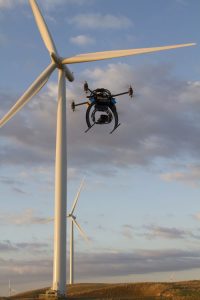
AI-powered aerial drones and underwater ROVs now autonomously inspect:


 Our specialty focus areas include

Net Zero by Narsi
Insights and interactions on climate action by Narasimhan Santhanam, Director - EAI
View full playlist- Turbine blades
- Subsea cables
- Tower foundations
- Monopiles and jacket structures
AI-driven image and video analysis detects cracks, corrosion, delamination, and marine growth with greater accuracy — cutting inspection time by 70% or more and improving safety by minimizing human exposure.
2. Predictive Maintenance for Turbine Health
Turbines are embedded with sensors monitoring:
- Vibration and acoustic signals
- Oil quality
- Temperature and electrical loads
AI models analyze this time-series data to predict failures in:
- Gearboxes
- Bearings
- Pitch/yaw drives
- Generators
This enables condition-based servicing, reducing reactive maintenance and lowering O&M costs by 15–25%.
3. Fleet-Level Performance Tuning
Not all turbines perform equally. AI compares real-time outputs to detect:
- Wake-induced underperformance
- Blade pitch mismatches
- Yaw misalignment
Machine learning then fine-tunes control settings to optimize overall farm yield, not just individual turbines.
4. Weather-Aware Crew and Vessel Dispatch
Access to offshore turbines is weather-dependent and costly. AI integrates:
- Wind, wave, and tide data
- Maintenance schedules
- Spare part availability
…to optimize crew routes, vessel timing, and intervention priorities — minimizing downtime and improving safety.
🛠️ Key O&M Challenges Solved by AI
✅ Challenge 1: Harsh Marine Conditions and Limited Access
Offshore environments are dangerous and unpredictable. AI enables:
- Remote diagnostics via digital twins
- Virtual inspections using sensor fusion
- Autonomous inspections without human exposure
✅ Challenge 2: High Cost of Downtime and Repairs
Downtime is extremely costly due to energy loss and access complexity. AI:
- Detects faults weeks before failure
- Schedules repairs during optimal weather windows
- Reduces unplanned interventions
✅ Challenge 3: Blade and Substructure Degradation
Salt spray, waves, and marine growth accelerate wear. AI-driven drones and ROVs:
- Detect surface corrosion and cracks
- Monitor biofouling progression
- Enable proactive asset protection
✅ Challenge 4: Fleet and Supply Chain Complexity
Offshore wind farms require massive logistical coordination. AI:
- Forecasts spare part demand
- Aligns turbine maintenance with vessel routing
- Consolidates crew interventions across turbines
🤖 AI Technologies Driving Offshore Wind Efficiency
| Technology | Application Area |
|---|---|
| Predictive Analytics | Gearbox, generator, and bearing failure forecasting |
| Computer Vision | Blade and foundation defect detection from drone/ROV imagery |
| Digital Twin Modeling | Virtual inspection and health simulation of turbines and substructures |
| Reinforcement Learning | Adaptive control of turbine yaw, pitch, and rotor speed |
| AI-Based Routing & Scheduling | Optimal crew and vessel logistics under marine weather constraints |
📈 Real-World Case Studies
Ørsted + Microsoft AI (North Sea)
Analyzed turbine telemetry using AI to predict mechanical faults, reducing unscheduled downtime and offshore trips across multiple farms.
Siemens Gamesa AI Suite
Uses AI to optimize blade pitch and yaw control based on wake modeling, improving turbine lifespan and energy output.
Vattenfall (UK, Scandinavia)
Employs drone + AI inspections to monitor subsea cable integrity and foundation condition, enabling predictive intervention.
🚀 Startups and Providers to Watch
| Company | TRL | What They Do |
|---|---|---|
| Aerones | TRL 9 | Robotic + AI platform for autonomous offshore blade inspection and repair |
| Clir Renewables | TRL 9 | AI analytics for performance optimization and risk reduction in offshore wind |
| Perceptual Robotics | TRL 8 | AI + drone systems for automated blade inspection and defect classification |
| Cognitive Offshore | TRL 7–8 | AI for real-time weather routing, crew logistics, and offshore asset scheduling |
| Kinewell Energy | TRL 8 | AI-driven cable layout optimization and O&M strategy planning |
🌊 Final Thoughts
Offshore wind is essential for scaling global renewable energy — but without efficient, intelligent O&M, costs can spiral, and safety risks multiply. AI changes the game.
By enabling autonomous inspections, predictive maintenance, fleet-wide optimization, and smarter logistics, AI allows offshore wind operators to maintain more turbines, more safely, and more profitably than ever before.
As wind farms move farther offshore and turbines grow larger, AI will be the essential co-pilot keeping our blades spinning and our climate goals within reach.
💡 Want More?
Follow us for more deep dives into AI’s role in offshore wind, autonomous inspection, and clean energy innovation on land and sea.