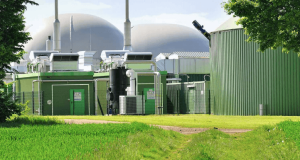
Biomass gasification converts organic waste into a combustible syngas – a flexible fuel for heat, power, hydrogen, or even synthetic fuels. But the process is notoriously sensitive to feedstock variability, tar formation, and reactor instability.
AI is transforming gasification into a precision-managed, real-time-optimized process – improving efficiency, reliability, and emissions performance across the board.
🎯 How AI Can Make This Product or Solution Much Better
🌾 Feedstock Profiling & Syngas Prediction
AI models analyze biomass inputs – moisture, ash, volatiles, C:H ratio – to forecast syngas composition (H₂, CO, CH₄, CO₂).
This enables real-time preprocessing recommendations (drying, pelletizing, particle size) to boost energy yield and reduce tar risk.


 Our specialty focus areas include

Net Zero by Narsi
Insights and interactions on climate action by Narasimhan Santhanam, Director - EAI
View full playlist🔥 Dynamic Reactor Control & Heat Management
AI dynamically regulates air/fuel ratios, bed temperature, and residence time inside downdraft, fluidized bed, or entrained-flow gasifiers.
Reinforcement learning ensures thermal stability and high carbon conversion, adapting instantly to changing biomass quality.
🧪 Tar Formation Minimization & Gas Cleanup
AI detects early signs of tar precursor accumulation and adjusts temperature or catalyst injection strategies to reduce fouling.
It also manages gas scrubbing, filtration, and cracking units to maintain syngas quality for downstream systems (CHP, FT, hydrogen).
⚙️ Integration with Downstream Systems
AI links the gasifier to Fischer-Tropsch synthesis, combined heat & power (CHP), or methanation units to balance syngas flow and heating value in real time.
This ensures steady fuel output aligned with grid loads, hydrogen demands, or jet fuel production.
🌍 GHG & Carbon Intensity Monitoring
AI-enabled digital twins simulate full-system Scope 1-3 emissions, track biochar carbon sequestration, and estimate carbon offset credits.
Helps producers comply with LCFS, RED II, or voluntary carbon markets while maximizing environmental ROI.
🛠️ How AI Overcomes Key Challenges
| Challenge | AI-Powered Solution |
|---|---|
| Feedstock variability | Real-time analytics adjust air flow and temperature for complete gasification |
| Tar contamination | Predictive control of cracking, filtering, and reactor tuning |
| Reactor slagging and clinker formation | AI forecasts ash melting and moisture behavior to prevent blockages |
| Load-following for energy/hydrogen | AI matches syngas output with downstream demand fluctuations |
🤖 Main AI Tools and Concepts Used
- Machine learning for syngas yield forecasting and reaction modeling
- Digital twins of gasifiers for real-time simulation and process optimization
- Reinforcement learning for multi-variable control in temperature and airflow
- Spectroscopy + ML for inline gas composition sensing
- Predictive maintenance for slag, ash, and refractory issues
📊 Case Studies
- TERI (India):
AI-assisted downdraft gasifiers for rural communities using ML to predict syngas output from variable wood chip inputs. - Fraunhofer IKTS:
Developed digital twins for gasifiers handling multi-feedstock streams with fault prediction via AI.
💡 From unpredictable combustion to precision-engineered synthesis gas, AI is making biomass gasification more viable, scalable, and sustainable – powering the transition from waste to wealth in both energy and materials.