Pests and weeds silently steal billions in crop yields each year, often before farmers even spot the damage. Artificial Intelligence is changing the game, enabling farmers to detect, predict, and eliminate these threats early, precisely, and sustainably by protecting both harvests and the environment.
🎯 How AI Can Make This Product or Solution Much Better
🔍 Early Detection and Prediction
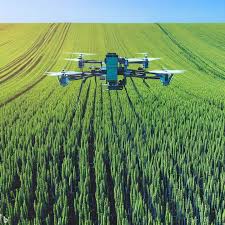
AI analyzes imagery from drones, satellites, and ground cameras to spot early signs of pest infestation or weed growth, often before human eyes can detect them.
Predictive models factor in climate patterns, historical data, and crop growth stages to forecast outbreaks in advance.
🗺 Site-Specific Pest and Weed Mapping
Machine learning processes multispectral and hyperspectral imagery to generate precise, geolocated maps of pest and weed presence.
This enables targeted interventions rather than blanket spraying.
🎯 Optimized Pesticide and Herbicide Application
AI powers Variable Rate Application (VRA) sprayers and robotic weeders that deliver chemicals exactly where needed.
This cuts chemical usage, lowers costs, and reduces environmental impact.


 Our specialty focus areas include

Net Zero by Narsi
Insights and interactions on climate action by Narasimhan Santhanam, Director - EAI
View full playlist🤖 Autonomous Pest and Weed Control Systems
AI guides autonomous robots and drones to mechanically remove weeds or deploy biocontrol agents at pinpoint locations, working day or night without extra labor.
🌱 Integration with Crop Growth Models
AI aligns pest and weed management actions with crop development stages, ensuring treatments are timed for maximum effectiveness and minimal crop stress.
🛠️ How AI Overcomes Key Challenges
| Challenge | AI Solution |
|---|---|
| Chemical overuse causing resistance & pollution | Enables micro-dosing and precise targeting to reduce chemical load |
| Labor shortages | Autonomous AI machinery replaces or augments manual work |
| Late detection of pests/weeds | Remote sensing and predictive alerts enable early, proactive action |
| Climate change shifting pest/weed patterns | Predictive models adjust strategies based on evolving climate data |
🤖 Main AI Tools and Concepts Used
- CNN-based computer vision for pest/weed ID
- Multispectral & hyperspectral imagery analysis
- Reinforcement learning for autonomous weeding robots
- Predictive modeling for pest outbreaks and weed growth cycles
- IoT-enabled traps and pheromone monitoring integration
📊 Case Studies
- Blue River Technology (USA) – “See & Spray” platform cuts herbicide use by up to 90% by targeting individual weeds.
- Taranis (Israel) – High-resolution drone imagery with AI detection at sub-millimeter detail.
- Ecorobotix (Switzerland) – Autonomous solar-powered weeding robot applying ultra-targeted herbicide.
- PEAT (Germany) – AI-powered Plantix app diagnosing pest and weed issues from farmer-uploaded photos.
🚀 Relevant Startups & Providers
| Company | Focus |
|---|---|
| Blue River Technology (USA) | AI-driven precision herbicide application, acquired by John Deere |
| Taranis (Israel) | AI aerial imagery for sub-millimeter pest and weed detection |
| Ecorobotix (Switzerland) | Solar-powered autonomous robot for ultra-targeted spraying |
💡 Want More?
Follow us for more insights into how AI is transforming agriculture, from precision pest control to fully autonomous farming, helping farmers protect yields with smarter, greener methods.