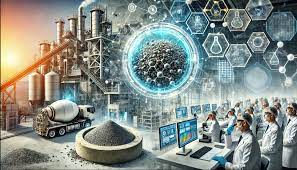
Cement is one of the world’s most carbon-intensive materials, but Artificial Intelligence is helping to replace high-emission clinker with low-carbon alternatives, without sacrificing strength or durability. From industrial byproducts to agricultural waste, AI is enabling faster R&D, smarter sourcing, and more reliable performance for sustainable cement blends.
🎯 How AI Can Make This Product or Solution Much Better
⚗ Optimizing Supplementary Cementitious Materials (SCMs)
AI predicts the mechanical strength, setting time, and durability of blends using materials like fly ash, slag, calcined clays, rice husk ash, and silica fume – cutting CO₂ emissions by up to 50%.
⏱ Rapid Material Screening and Formulation
Machine learning analyzes lab data to recommend optimal blend ratios in days instead of months, enabling clinker substitution of up to 70% in certain applications.
🌍 Integration with Local Supply Chains
AI maps regional waste streams for cement substitution, factoring in cost, availability, and carbon footprint.


 Our specialty focus areas include

Net Zero by Narsi
Insights and interactions on climate action by Narasimhan Santhanam, Director - EAI
View full playlist📈 Predictive Performance Modeling
AI forecasts long-term performance – strength, shrinkage, carbonation resistance, sulfate resistance – across different climate conditions.
📜 Regulatory Compliance Automation
AI aligns new cement recipes with building codes and standards, streamlining certification and market adoption.
🛠️ How AI Overcomes Key Challenges
| Challenge | AI Solution |
|---|---|
| Variability in byproduct quality | AI adjusts blend ratios in real time to ensure consistent performance |
| Market skepticism toward alternative cements | AI generates data-backed reports and digital twins to prove durability |
| Supply chain constraints | AI optimizes local sourcing for continuous availability |
| Long testing cycles | AI predictive models shorten R&D timelines by months |
🤖 Main AI Tools and Concepts Used
- Machine learning for blend optimization
- Predictive analytics for mechanical/chemical performance
- Digital twins for long-term durability simulation
- AI-enabled supply chain optimization
- LCA modeling software for carbon assessment
📊 Case Studies
- Cemex (Mexico) – AI-optimized fly ash + slag blends reduced clinker factor by 18%.
- Heidelberg Materials (Germany) – AI supply chain platform saved €2M annually through local byproduct sourcing.
🚀 Relevant Startups & Providers
| Company | Focus |
|---|---|
| Solidia Technologies (US) | AI-controlled CO₂ curing cycles |
💡 Want more?
Follow us for more on how AI is transforming cement production, from greener materials to smarter plants, helping the industry build a low-carbon future.